
Indoor vs. Outdoor Fiber Installations: Which One to Choose and Why?
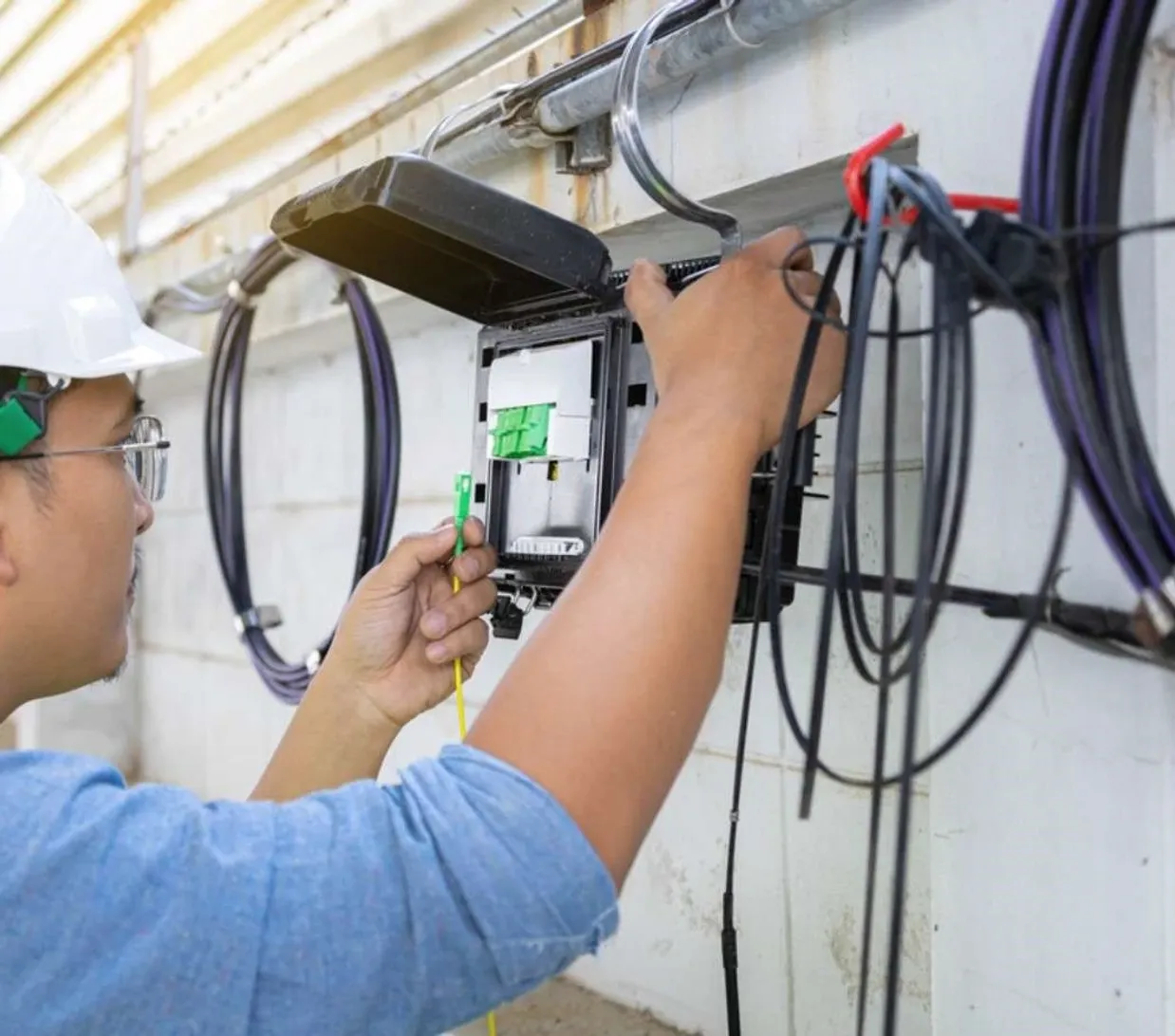
One of the most common decisions in network planning is choosing between indoor and outdoor fiber installations. While both serve the same fundamental purpose—transmitting data through optical signals—their design, construction, and applications differ significantly due to the environments in which they operate. Selecting the appropriate type is essential for ensuring network stability, safety, and long-term performance.
Indoor fiber installations are designed for controlled environments such as office buildings, residential complexes, data centers, and commercial facilities. In these environments, fiber cables do not face extreme weather conditions or significant mechanical stress, so their construction focuses more on flexibility, ease of routing, and compliance with building safety standards. Indoor fiber cables typically have lighter protective jackets and are easier to install through walls, ceilings, cable trays, and network racks. They are commonly used for connecting networking equipment, distributing connectivity across floors or departments, and linking patch panels with switches, servers, and other communication devices. Another important characteristic of indoor fiber cables is the use of flame-retardant materials, which help meet fire safety regulations within buildings.
Outdoor fiber installations, on the other hand, are built specifically to operate in much harsher conditions. These cables must withstand environmental factors such as temperature fluctuations, moisture, ultraviolet radiation, and mechanical stress. Because of this, outdoor fiber cables include additional protective layers that make them significantly more durable than indoor cables.
Many outdoor cables feature UV-resistant jackets, water-blocking gel or tape, and reinforced structures that protect the fiber core from environmental damage. Some are also armored to prevent damage from physical impact or pressure. Outdoor installations are commonly used for underground conduit systems, aerial cable deployments on utility poles, and long-distance backbone connections between buildings or across urban infrastructure. They are also widely used in fiber-to-the-home (FTTH) and fiber-to-the-building (FTTB) network deployments.
Although both types of installations use the same optical transmission technology, their structural differences make them suitable for very different environments. Indoor cables prioritize flexibility and safety, while outdoor cables focus on durability and environmental protection. Using the wrong type of cable can lead to serious performance and reliability issues. For example, indoor fiber cables exposed to sunlight and moisture may degrade quickly, while outdoor armored cables installed inside buildings may create unnecessary complexity due to their thickness and rigidity.
In many real-world network deployments, a combination of both installation types is used. Outdoor fiber cables are typically responsible for delivering connectivity from the main network infrastructure to the building, while indoor fiber cables distribute the connection throughout the interior network environment. This hybrid approach ensures that each section of the network uses the most appropriate cable type for its conditions.
From a technical perspective, the best approach when planning a fiber network is to carefully evaluate the installation environment, safety requirements, and long-term maintenance considerations. Properly matching the fiber cable type to the installation conditions not only protects the network infrastructure but also helps maintain optimal signal performance and reduces the likelihood of costly repairs in the future. In modern telecommunications systems, where reliability and speed are critical, making the correct choice between indoor and outdoor fiber installations plays an important role in building a stable and scalable network.